Navigation
Close
Interactions Report - May 2026
In May 2026, pressure grew on the Irish Government to take stronger action against Israel, particularly around sanctions, the Occupied Territories Bill, and the detention of Irish activists aboard the Global Sumud flotilla. Expanding protests, boycotts, and solidarity campaigns highlighted a widening gap between strong public support for Palestine and a government balancing moral rhetoric with diplomatic and economic constraints.
Ireland Reports
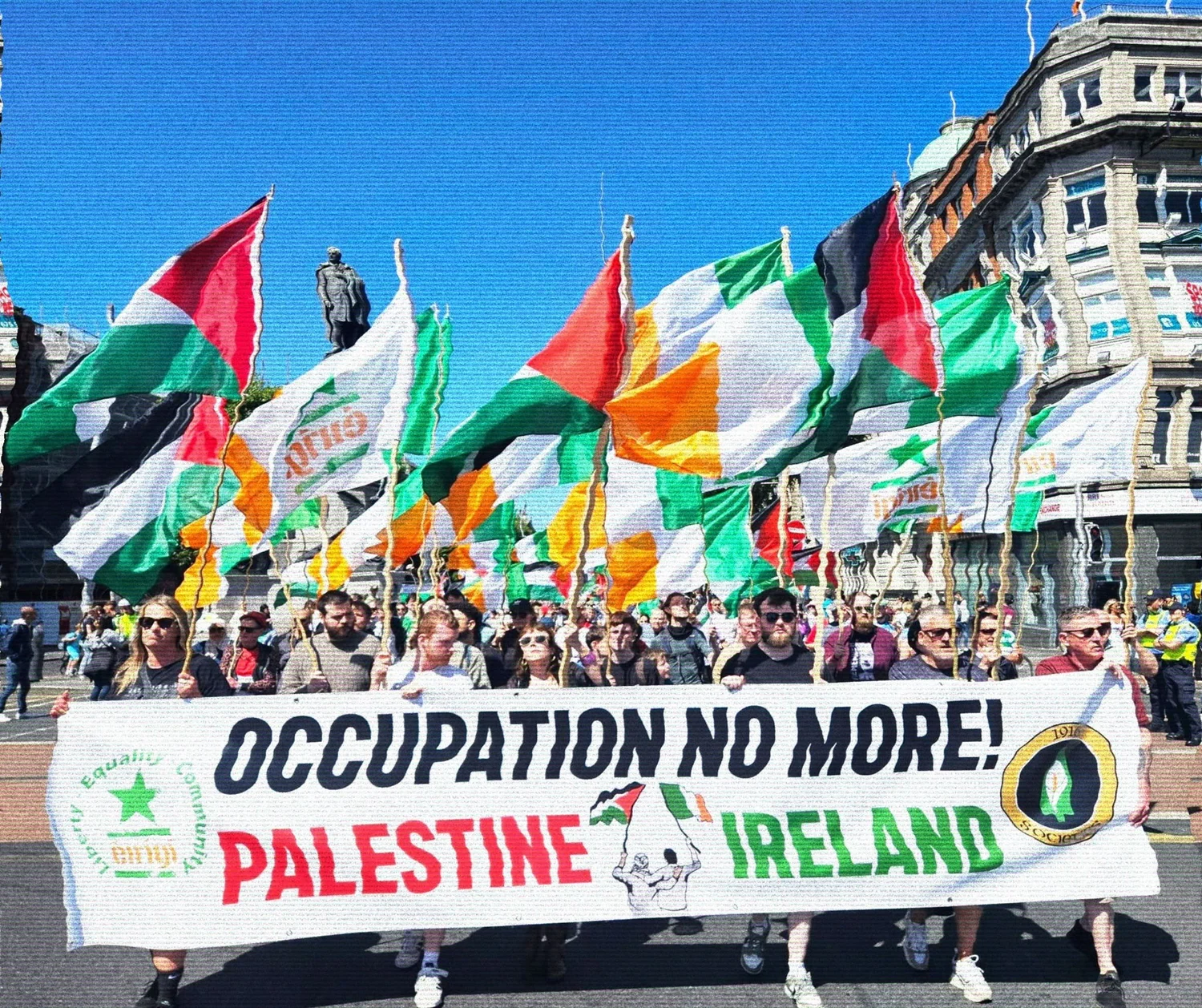
In May 2026, Palestine remained a major political and public issue in Ireland, with growing pressure on the Irish Government to move beyond diplomatic condemnation and adopt stronger unilateral measures against Israel. Debate centred heavily on the revised Occupied Territories Bill, with widespread criticism from opposition parties, human rights bodies, and advocacy groups over the exclusion of commercial services and Ireland’s continued balancing of legal obligations against economic and multinational interests. The month was further shaped by controversy surrounding €20 million in previously approved dual-use technology exports to Israel, alongside strong governmental criticism of Israel’s interception of Irish activists participating in the Global Sumud aid flotilla.
At the same time, grassroots solidarity campaigns and public figures intensified efforts to push Ireland towards stronger action on Palestine through boycotts, protests, and cultural interventions. Campaigns focused on demanding the cancellation of Ireland’s football fixtures against Israel, supporting Eurovision boycotts, opposing weapons-linked airspace use, and mobilising mass demonstrations around the Occupied Territories Bill and sanctions legislation. This growing public activism highlighted an increasingly visible gap between widespread solidarity with Palestine across Irish civil society and a government perceived as constrained by diplomatic, legal, and economic considerations.
From the gallery
Gallery


