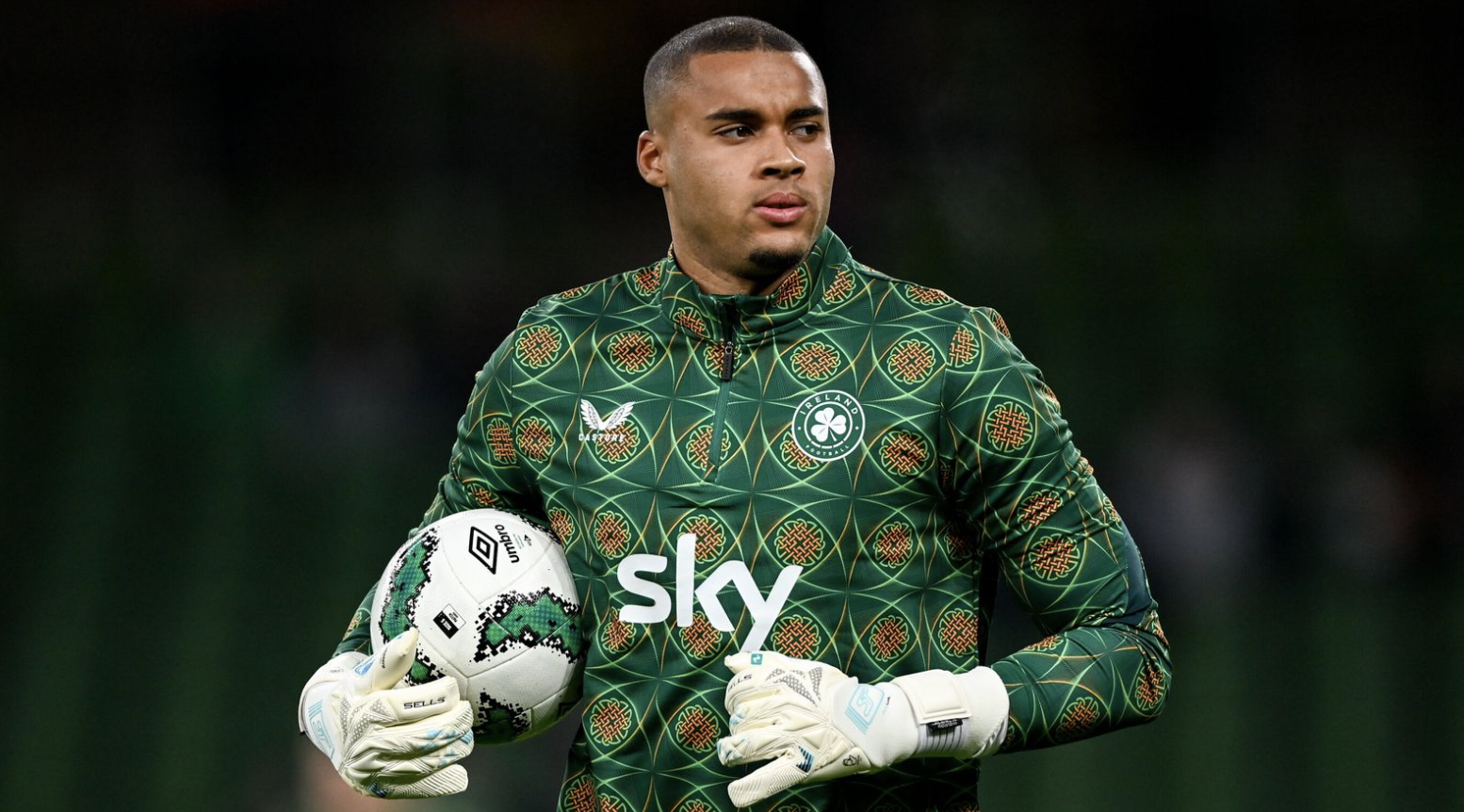
Ireland’s goalkeeper, Gavin Bazunu, has withdrawn from the national team’s upcoming match against Israel, stating it would be wrong to participate while civilians are being killed in Gaza. His decision comes days after more than 160 Irish athletes publicly called on the national team to boycott the fixtures.
Bazunu, 24, told Ireland’s squad that he did not want to play before the team held a four-hour discussion over whether to fulfil Sunday’s Nations League match in Debrecen, Hungary. The players ultimately voted by a “significant majority” to play, meaning Bazunu became the only confirmed member of the squad to single-handedly withdraw.
In a statement, Bazunu said representing Ireland “means everything” to him, but that his faith and personal principles prevented him from taking part.
His withdrawal follows an open letter signed by more than 160 Irish athletes, which called on Ireland’s players to collectively refuse to participate in the two Israel fixtures, arguing that sport’s principles of equality and fairness are incompatible with Israel's current war on Gaza.
The Football Association of Ireland has also previously sought UEFA action against Israel. The FAI asked UEFA to suspend the Israel Football Association from European competitions, citing alleged breaches of UEFA regulations. UEFA did not grant the request.
The FAI has now confirmed that the matches will go ahead. Players have nevertheless agreed to wear black armbands commemorating those killed in the conflict and to skip parts of the traditional pre-match ceremony, including the handshake and exchange of pennants.
The split within the squad highlights the wider debate over whether symbolic protest while playing is enough, or whether refusing to participate is necessary to make a meaningful sporting statement. Bazunu has chosen the latter, while his teammates have opted to play while publicly signalling their opposition to the circumstances surrounding the fixture.
Ireland will face Israel again on 4 October in Bačka Topola, Serbia, with both matches being played away from the teams’ home countries and behind closed doors.