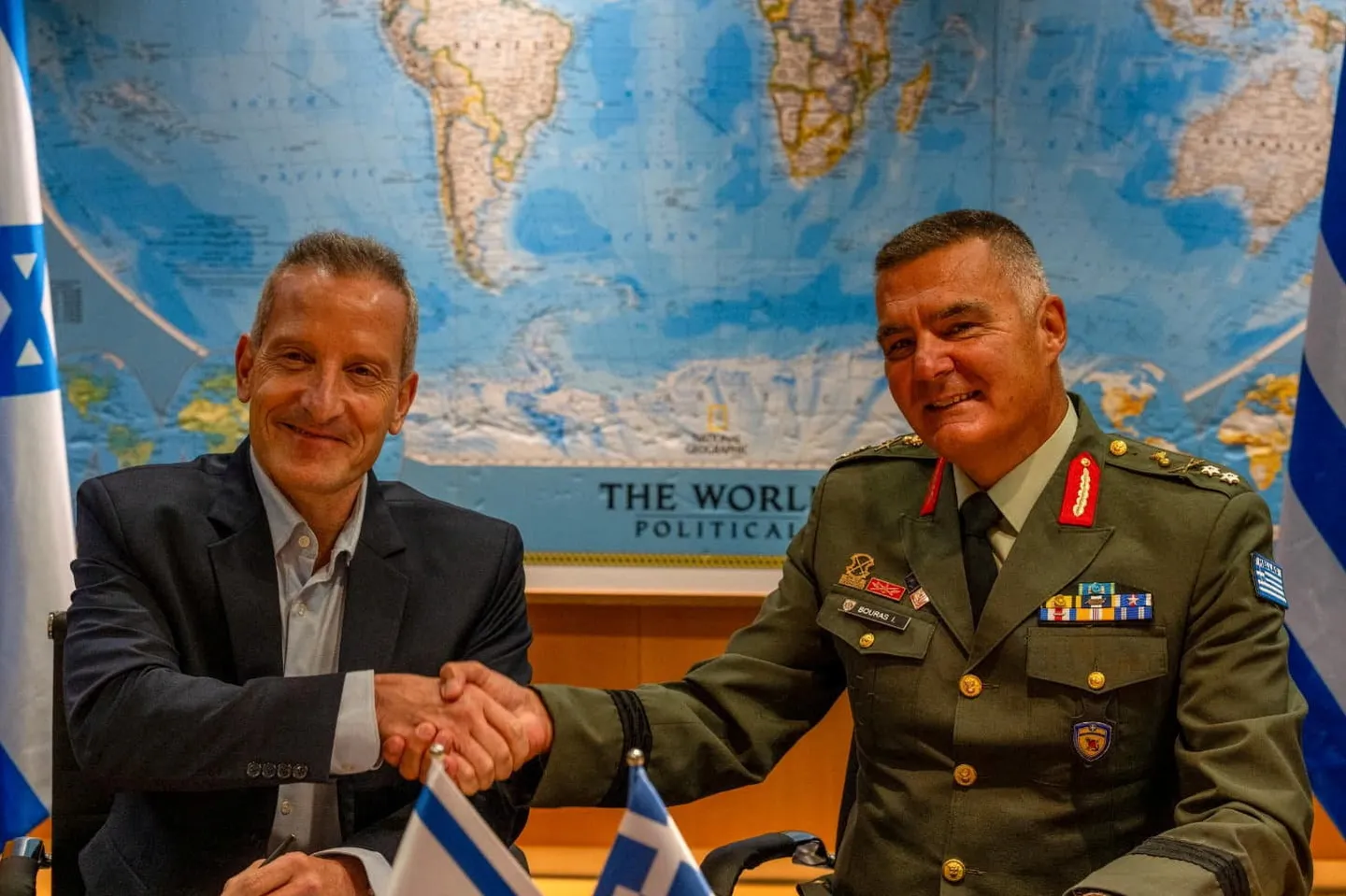
Greece showcased components of its new “Achilles Shield” air-defence system for the first time during its military parade in Thessaloniki on 28 October, highlighting the country’s growing military cooperation with Israel. But the programme, worth more than €3 billion, has sparked criticism over Greece’s reliance on Israeli military technology, the lack of transparency surrounding the deal and questions about who will ultimately control the system.
The five-layer defence network is designed to integrate radar, missile interception, surveillance and command-and-control capabilities across Greece’s airspace and maritime territory. The agreement is aimed at creating a connected network capable of countering drones, aircraft and missiles. The Greek government expects the system to reach full operational readiness within 35 months.
A central concern is access to the system’s source code, which determines how its software operates and can be modified. Moshe Patel, head of Israel’s Missile Defence Organisation, said Greece would not receive the source code for the command-and-control capabilities as part of the usage licence. Israel later said Greece would develop and control its own software for connecting the various systems, but the source code for the Israeli-made weapons themselves would remain inaccessible.
This raises questions about Greece’s ability to independently operate, maintain and adapt the system during a crisis, particularly if it requires Israeli technical support. The agreement has also drawn criticism from opposition parties over the cost and the lack of parliamentary scrutiny. Including a separate €650 million purchase of the Israeli-made PULS rocket system, the total defence expenditure could reach €3.75 billion, according to the opposition party Nea Aristera.
The deal has also prompted concerns over alleged links between individuals connected to Israel’s defence industry and Greece’s Predator spyware scandal.
The Greek government has defended the programme as necessary to strengthen deterrence against regional threats, particularly tensions involving Türkiye. The parade displayed selected components of the planned system, including counter-drone technology and a SPYDER missile launcher, alongside tanks, unmanned vehicles and other military equipment.
While Athens presents Achilles Shield as a major step towards modernising its armed forces, critics argue that a system intended to protect Greek sovereignty could leave the country dependent on Israel for essential military technology.