More than 1,500 people facing terrorism charges over alleged support for the direct action group Palestine Action were caught in widespread confusion after their cases were simultaneously adjourned and listed for hearings at Westminster Crown Court.
Campaign group Defend Our Juries (DOJ) said 1,579 defendants had their cases scheduled for Thursday despite many having already received letters postponing proceedings until October. Some notices even instructed recipients that they ‘must attend’ court before telling them, ‘Please do not attend.’
Defendants who travelled from across the UK arrived to find conflicting information, non-existent courtroom listings, and generic letters stating attendance was not required. DOJ said the mix-up exposed ‘complete meltdown’ in the criminal justice system following the group's proscription.
The confusion came as the Supreme Court ruled that Palestine Action can challenge its ban. The proscription has led to thousands of arrests over the past year, many involving people accused of displaying signs or clothing expressing support for the group.
Former government lawyer Tim Crosland described the court's handling as unprecedented, saying it appeared designed to avoid the logistical challenge of processing hundreds of terrorism cases at once. DOJ spokesperson Clive Dolphin argued the court was unlawfully treating hundreds of individual cases as a single ‘block booking’, despite each requiring separate consideration.
HM Courts and Tribunals Service said all defendants had been informed of the changes and would continue to receive updates.
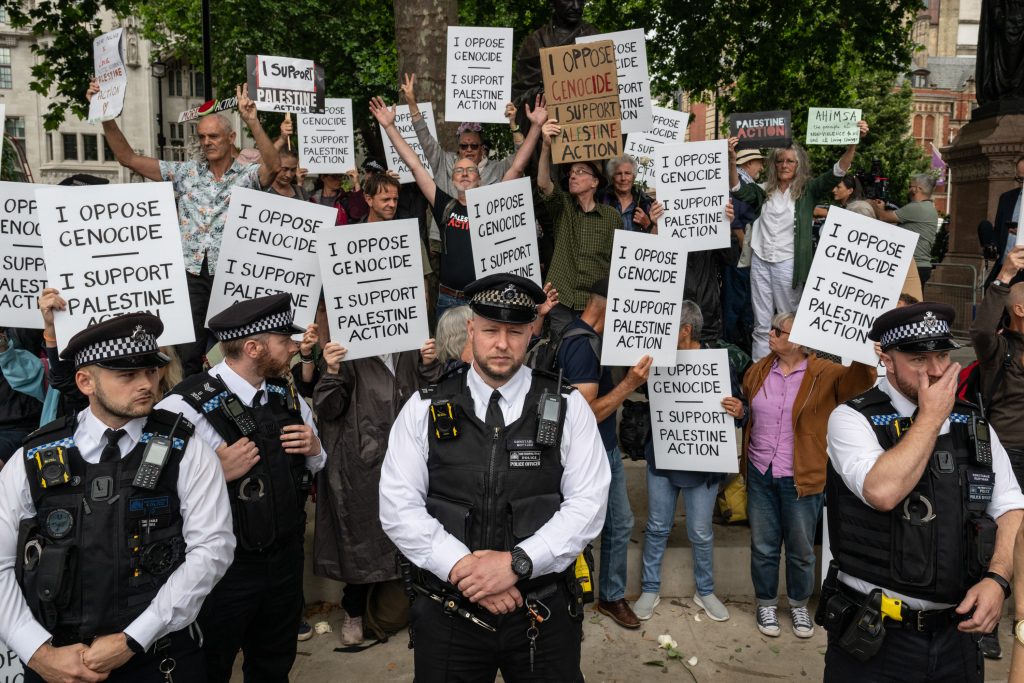
Outside the court, police arrested 77 protesters during a demonstration in support of Palestine Action. Most were detained on suspicion of expressing support for a proscribed organisation, while four were arrested for allegedly encouraging criminal offences.
Human Rights Watch condemned the use of terrorism legislation against peaceful protesters, warning it undermines freedom of expression and ‘makes a mockery of justice.’